
Men seldom make passes
Growing up four-eyed and why Mary Bennet's glasses matter
One day, when I was in second or third year in college, I was on my way back from the bathroom in the Arts Block when I bumped into a friend of mine. We were in the same class and had seen each other every day for years at this point, but she looked surprised when she saw me that day.
‘Anna!’ she said. ‘I didn’t know you wore glasses!’
It was, no exaggeration, one of the best things anyone had ever said to me in my life.
I started wearing glasses when I was nine. From the start, I had to wear them all the time. I was and am short sighted, the sort of short-sighted that means I seriously can’t function without spectacles or contact lenses. By the time I was in my mid-teens my eyesight had more or less settled into what it is today - roughly -5 in each eye. And by that stage, I really, really hated my glasses.
I have never actually been teased or in any way isolated for wearing glasses. In fact, I didn’t really mind them until I hit adolescence. I turned thirteen and started secondary school in September 1988, and I can’t remember a single hot woman in the public eye at the time who wore glasses. Although if there had been, my fellow bespectacled teen girls and I might not even have registered them as hot. Once someone’s parent said that one of my best friends at school looked like the 70s Greek star Nana Mouskouri. Today, if someone said I looked like Nana, I would take it as a massive compliment. But we did not see it that way at the time. At the time a comparison to any glasses-wearer seemed deeply uncool.
And worse, it seemed…. unsexy. Unattractive. I barely knew who Dorothy Parker was when I was thirteen (a few years later I would acquire Penguin’s Portable Dorothy Parker in a charity shop and fall in love) but I knew the poem ‘Men seldom make passes/At girls who wear glasses’. And I took it to heart.
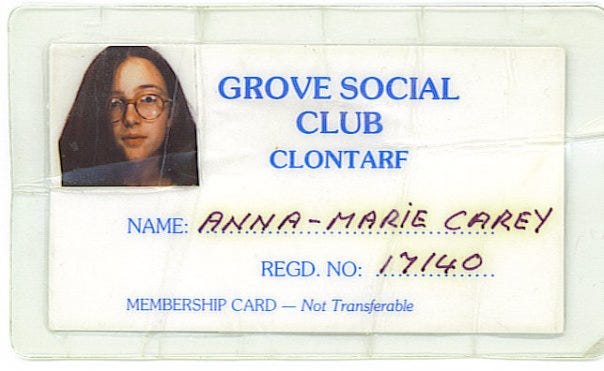
That fear of being unattractive is why I started hating wearing glasses.
I could pretend that I was above caring about that sort of thing. But I very, very much wasn’t. I never, for a second, thought of changing my behaviour to impress the few boys I knew back then (the one advantage of going to an all-girls school is that my friends and I always remained very much ourselves and the idea of pretending to be into stuff we didn’t like or dampening our own personalities to impress boys remained unthinkable to us). But I still wanted boys I liked to fancy me. And I was convinced that my glasses were putting me at a disadvantage. Based on the photo above, you might think that my hair was also putting me at a disadvantage, but almost everyone had terrible hair in the early 90s so that wasn’t such a big problem. What was a problem, as far as I was concerned, was the fact that half my face was covered with tortoiseshell and plastic.
I wanted to get rid of my glasses. I actively resented my glasses. Perhaps surprisingly, I didn’t actually mind how I looked (again, apart from the hair) without my glasses. But I lived in a world where glasses were literally a shorthand for “unsexy dork” in every film and TV show and comic. My glasses made me feel like other people must automatically see me as unattractive, however I saw myself. It was like being given a label. And I hated it.
It felt as though to the outside world my glasses exaggerated certain aspects of my personality - that I loved reading, that I was anxious, that I talked a lot, that I was very enthusiastic about the things I loved and hated – and turned them into badges of unsexiness. I was already worried that there was something wrong with me because I didn’t kiss anyone until I was almost 16 (it seems insane now, but I can’t convey the extent to which my best friend and I worried about the fact that we hadn’t kissed anyone yet when we were fifteen. We talked about it ALL THE TIME and when we went to the Gaeltacht we refused to play Truth or Dare with the southside girls because we knew they’d ask about what we’d done with boys and neither of us had done anything at all yet).
The first boy I kissed, not long before my sixteenth birthday, literally broke up with a girl he had just started seeing as soon as he found out I liked him and then asked me out straight away. Somehow I never internalised the fact that a boy had actively chosen me over a girl who did not have glasses. What I did internalise was the fact that, after that very short relationship (seriously, I think it lasted less than a fortnight), I was single again for pretty much the rest of my teens.
And somehow wearing glasses became tied to those feelings of inadequacy, of worrying there was something wrong with me because I had never experienced a perfect, passionate love affair by the age of seventeen. Or eighteen. Or nineteen, for that matter. My brain had somehow internalised the message that girls didn’t get that if they were wearing glasses, and that message was stuck in my head even after I got contact lenses. The damage had been done.
Two of my best friends also had glasses when we were in school, which exacerbated the entire thing. Like me, they were skinny and dark-haired which only heightened the impression of being a matching set, and when we were out together with other friends, passing boys (it was always boys) sometimes literally pointed at the three of us and laughed and said original things like ‘You all have glasses!’ I can’t describe how self-conscious of my glasses this made me. All three of us got contact lenses as soon as we could, and we still wear them when we meet up today. One of my friends got her contacts a few months before I got mine, in time for us going to the Gaeltacht as cinnires, and I was so jealous of her I wanted to cry.
In the first draft of my novel Our Song, there was a lot more about the fact that the heroine Laura is short-sighted. Our Song isn’t nearly as autobiographical as a lot of people thought it was when it came out, but there are a few occasions where Laura’s feelings are totally my own. One is when she talks about how she feels about not being able to have children, a crucial scene which of course made the final version of the book. But the other times when Laura basically spoke for me were mostly in that first draft, when she talks about wearing glasses. In that draft, when she goes to the Gaeltacht as a teenager, this is what she is thinking at the train station:
A week later, on a cold April morning, I was waiting for the Galway train at Heuston Station, checking my rucksack one last time to make sure I’d remembered to bring all my contact lens stuff. And my glasses, of course. I had to grudgingly admit that I wasn’t going to be able to wear contacts for every waking hour, at least if I wanted to avoid an eye infection. But I was determined to only take them out in the room I was going to share with my schoolfriends. I was reinventing myself! No one I met in Connemara was even going to know I was short sighted.
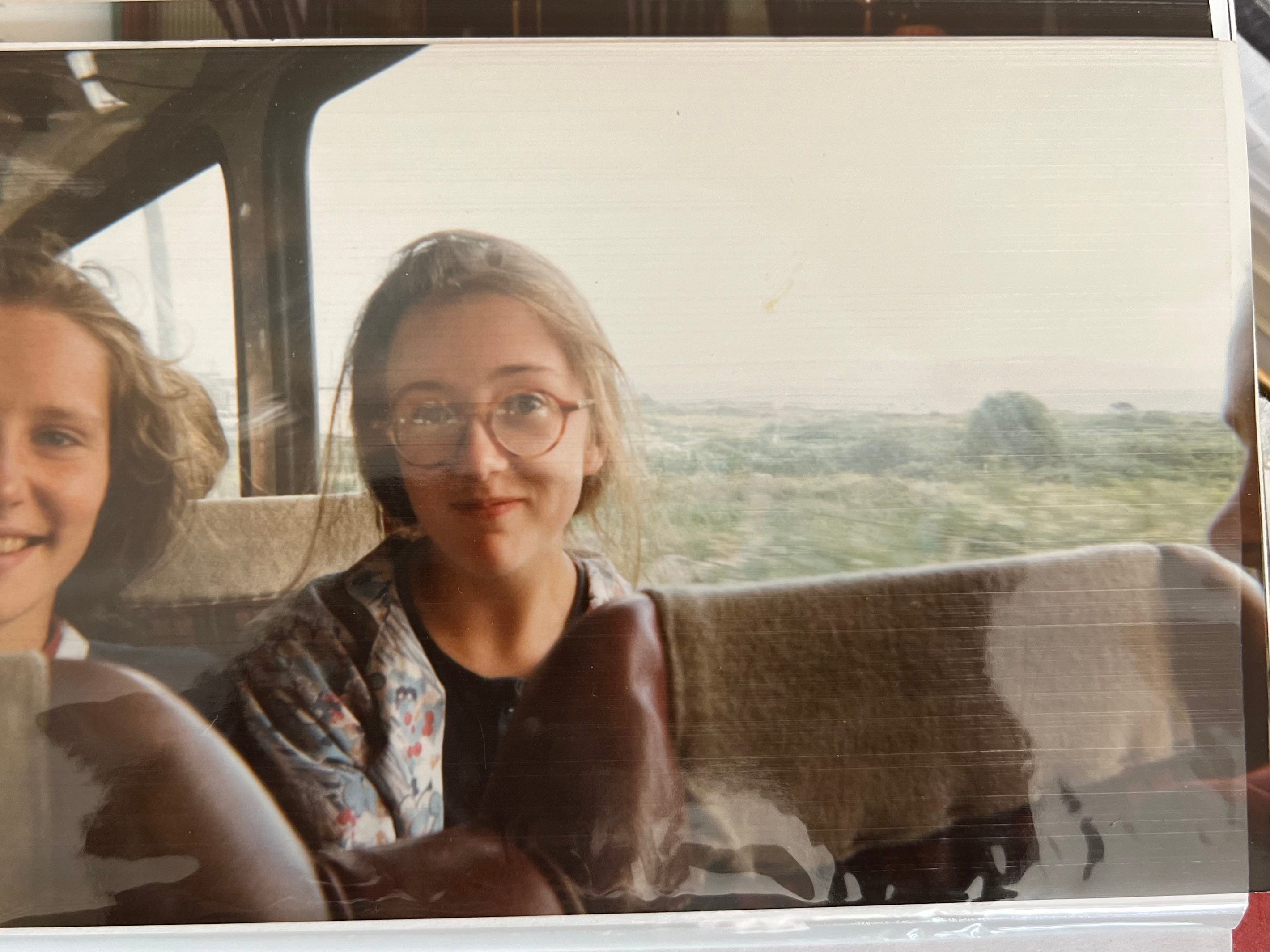
In the Gaeltacht Laura meets and starts a band with a boy called Tadhg, on whom she has a massive crush; they form another band in college before going their separate ways and eventually reunite 16 years later to finish a song they started writing together back then. And in the first draft, there was a scene set in the present day, when Laura has to take out her contact lenses in front of Tadhg:
But then [Tadhg] says, ‘Are you too tired to watch a film in the screening room?’
And I realise I’m not. But I also reluctantly realise something else.
‘I have to take my contact lenses out first,’ I say. ‘I’ve had them in for about ten hours.’
I jump to my feet, wash my hands at the kitchen tap, pop out and bin my disposable lenses, and get my glasses case out of my bag.
‘God, I think I’ve only ever seen you in your glasses about twice,’ says Tadhg when I’ve put my specs on. ‘I’d forgotten you even needed them.’
‘Oh, I need them all right.’ I point at my eyes. ‘Minus four point five, baby!’
‘Lightweight.’ He points at his own glasses. ‘Minus five. But why do you never wear your glasses? They really suit you. I never minded wearing mine.’
I’m hardly going to say what I’m thinking, which is that of course he never minded wearing glasses; he was always so good looking that they only enhanced his charm. I don’t think he could properly understand the self-doubt of a pleasantly average-looking teenage girl who had the worst and least helpful words Dorothy Parker ever wrote going around in her head. If it were true that men seldom made passes at girls who wore glasses, then surely I needed all the help I could get. And that meant getting rid of them ASAP. It seems ridiculous now – I was wearing glasses when I met Dave, and that didn’t put him off. But it strikes me that I’ve worn my contacts every single time I’ve met Tadhg since that first reunion in the restaurant. Old habits clearly die hard.
I answer honestly, but with a grin so he thinks I’m joking. ‘Vanity.’
Like Laura, I got contact lenses when I was 16, though it was too late for that year’s Gaeltacht outing. When I went for the first session at Specsavers, I was so terrified of touching my eyes that it took literal hours before I could get a contact lens in and after that I simply couldn’t take it out. Specsavers weren’t allowed let you go home with lenses until you could insert and remove them and eventually they said I had to give up for the day and come back tomorrow.
I was horrified at the thought of being denied contact lenses at the last hurdle. And so my hatred of wearing glasses pushed me to keep trying, trying to pinch at my eye despite the fact that the thought of putting my fingers anywhere near my eyes made me physically recoil. The minute I eventually managed to remove one lens they basically shoved me out the door, relieved to have done their duty (it took weeks before I could do it without flinching; two years later I was able to take out my lenses after a late night out while still drunk and without using a mirror).
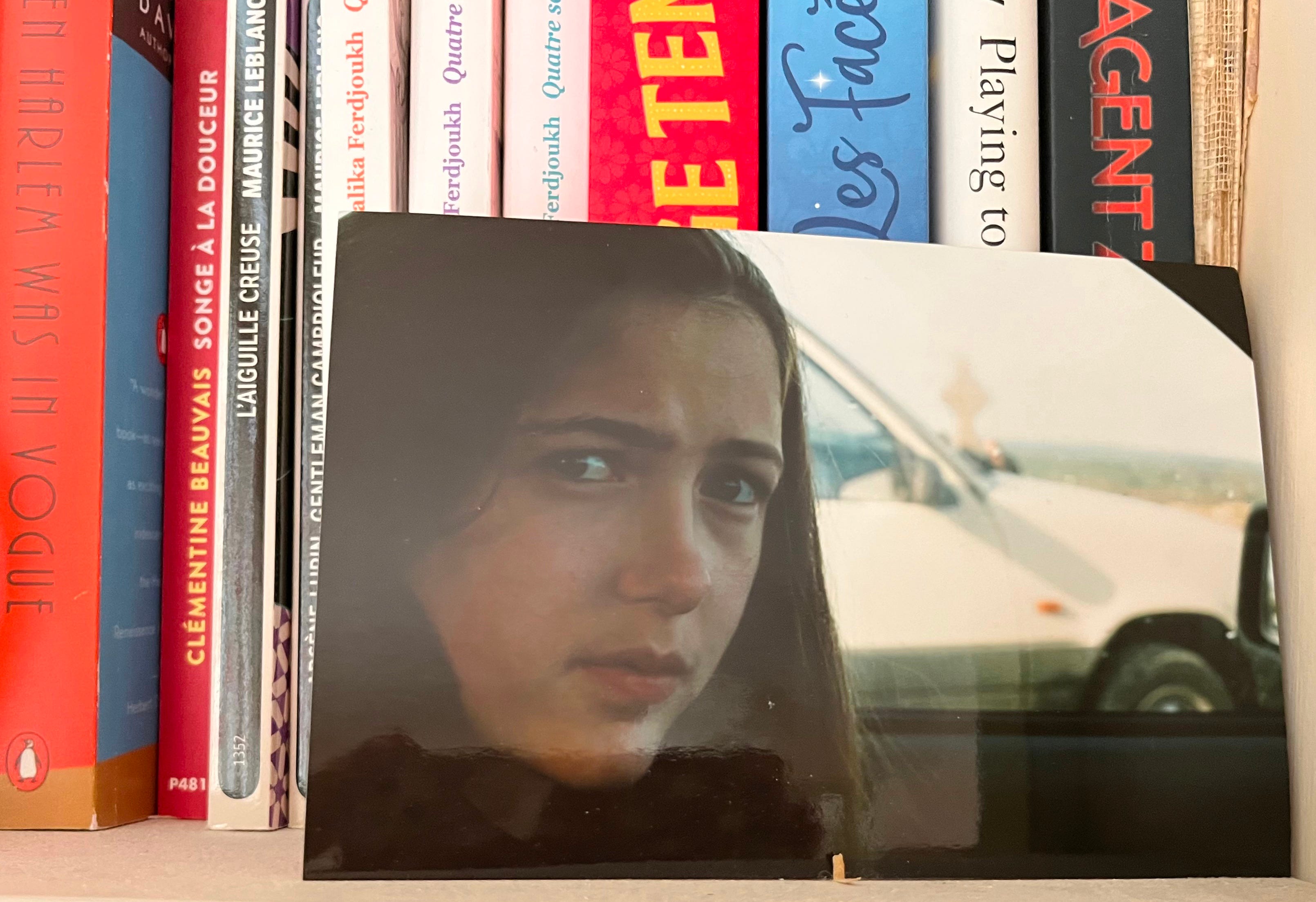
Laura’s thoughts on that train station platform describe exactly how I felt when I started college. From the morning I walked through Trinity’s Front Arch and into Fresher’s Week in 1993, I wore my contact lenses every single day. Because I was so scared of damaging my eyes and being unable to wear contacts anymore, I followed the advice to the letter and removed my lenses after a certain number hours, usually when I was studying in the library. I would keep them out for exactly half an hour and then put them back in again so I could wear them all evening. It was on one of those breaks that my friend happened to see me in my glasses for the first time. The realisation that she had never thought of me as a glasses-wearer, as one of them (even though of course I was one of them, I still am one of them and I always will be), made my heart soar in a way I find both shameful and understandable thirty years later.
I thought of that moment this week when I watched The Other Bennet Sister, an utterly gorgeous BBC adaptation of Janice Hadlow’s novel that made me cry multiple times in every single episode and which, as I write, has spoiled me for all other on-screen romances for the foreseeable future. It tells the story of Mary Bennet, the awkward, bookish sister in Pride and Prejudice to whom Mr Bennet memorably says ‘You have delighted us long enough’ when she plays the piano in public (a line that has worked its way into my own family lore). Sarah Quintrell, the writer of the series, said ‘Most of us like to think we’re Lizzy, but we’re actually Mary.’ And when it comes to this series, that goes double if you wear glasses.
I am the second of four sisters, and despite the fact that my dad used to jokingly compare himself to Mr Bennet, surrounded by daughters, my upbringing couldn’t have been more different to Mary’s. My sisters and I get on very well, and despite our teenage screaming matches and clothes-stealing, we always have. There are no wallflowers in my family; my husband has described me and my sisters as having the confidence of “four only children”.
In contrast Mary in TOBS is constantly dismissed by her mother (a brilliantly monstrous Ruth Jones) in favour of her sisters; she is isolated in a way I certainly never was (there’s a superb scene later in the series when she tells her well-meaning sister Elizabeth how different their lives were growing up in the same house). She has no friends or close confidantes; she certainly doesn’t have fellow speccy girls who understand her, as I did. And yet I could see myself, or at least my younger self, in her in a way I have rarely done in any romcom heroine.
Mary is played brilliantly by Ella Bruccoleri, who is perfect for the role. It’s so rare to see someone who looks like most of us do without make-up as a romantic lead, and I was surprised by how much it affected me. Mary never looks cartoonishly plain; there was no attempt to give Bruccoleri a preposterous makeunder a la Bette Davis in Now Voyager. In real life (I loved this show so much I have already watched lots of cast interviews) Bruccoleri looks absolutely lovely and very pretty, but most of the time in The Other Bennet Sister she just looks pleasantly ordinary, and not Hollywood ordinary. She looks like (possibly) you or (definitely) me when we look in the mirror every day, sometimes slightly blotchy, making awkward faces, taking her glasses off and rubbing her eyes. Like most of us, this is a woman who ‘scrubs up well’ but doesn’t always bother scrubbing up. You don’t realise that you never usually see a woman like this on screen until you see it here.
The first two episodes of the series, which parallel the action of Pride and Prejudice, are the weakest of the series, but are still hugely enjoyable and very moving. And my favourite moment was the scene in which Mary goes to the optician and gets fitted for her first pair of glasses. When the text being held up in front of her finally comes into focus and she realises she can now read comfortably, I cried. That scene was, at its core, a reminder that glasses are a miracle, that without them my life would be infinitely worse and that for centuries the short-sighted ancestors whose genes I inherited just spent their entire lives unable to see properly.
It’s also a reminder that while Mary’s mother sees her glasses as a curse, rendering her even less attractive than Mrs Bennet believes her to be, Mary sees them as liberation. And yet the scenes where she attends local assemblies are painfully relatable to anyone who was ever a self-conscious girl, dreading not being picked by boys even if you don’t like any of the boys, worried that no one will ever want you and that your glasses will put them off even if they did. They made my heart ache.
The series really kicks off when Mary goes to London to stay with her aunt and uncle, Mr and Mrs Gardiner (played delightfully by Indira Varma and Richard Coyle) and meets the charming, friendly lawyer Tom Hayward, played to utter perfection by Cork actor Dónal Finn. He sees her weirdness and pedantry and he likes it; they make each other laugh and they share an utterly convincing chemistry that evolves into the most gorgeous, funny, perfectly romantic love story I’ve encountered in a long time. There is a scene in which they dance together at a party and he looks at her in a way that burns through the screen as she carefully counts her steps under her breath. It’s the hottest, most romantic thing I’ve seen on screen this year. They barely make physical contact but the yearning, oh God, the yearning! It is pure bliss.
And then there’s a scene in which he shows her his drawings of the natural world that made me laugh out loud. And a scene in which he introduces her to poetry on her terms that made me cry all the way through it.
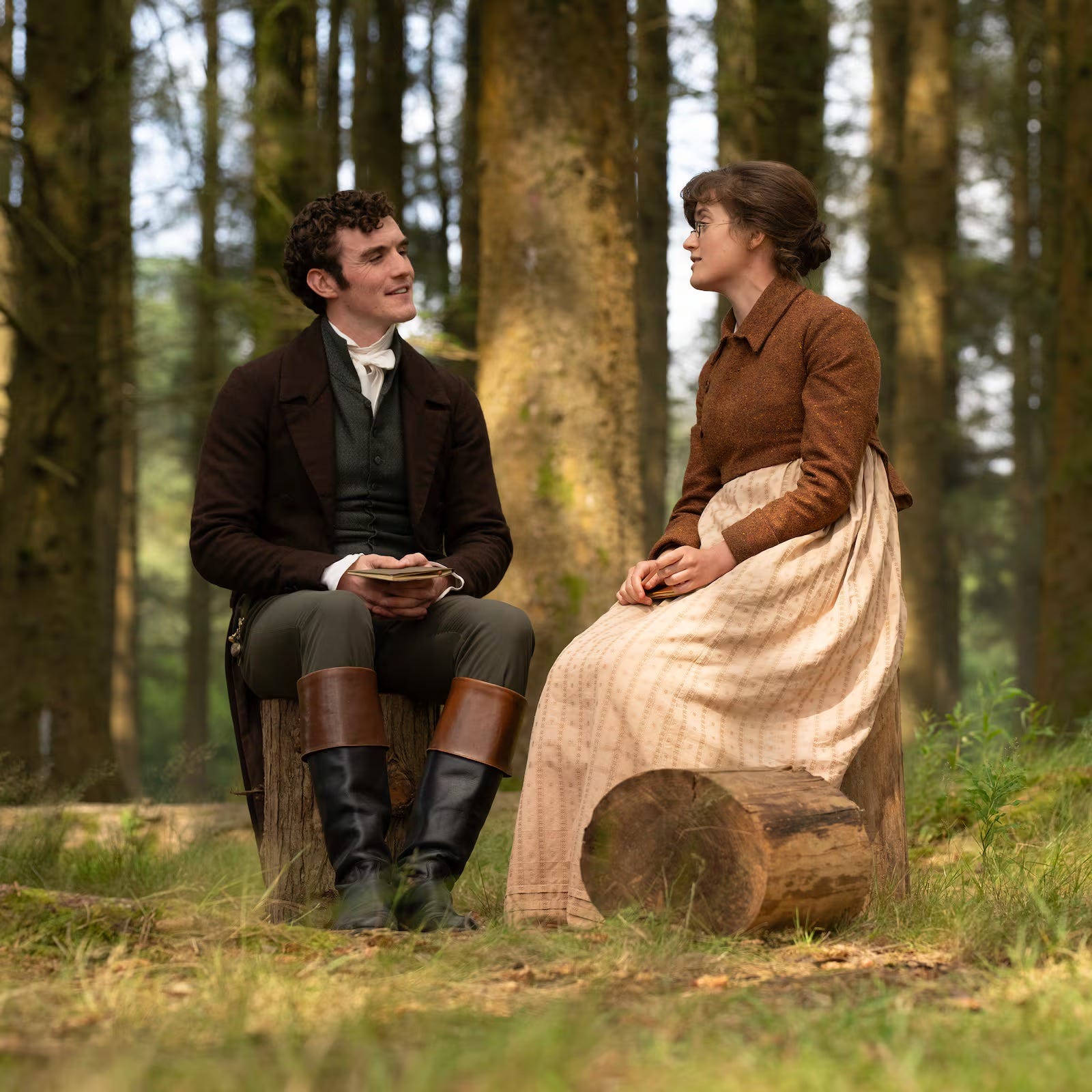
I cry easily at the best of times when it comes to TV and film, and I cried through a lot of this show. Ella Bruccoleri has said that they made the decision to keep Mary wearing her glasses in all the big romantic scenes because they didn’t want to suggest that the men only fancy her when she’s not wearing them. They wanted to avoid the ‘Why, you’re beautiful without your glasses!’ clichés and I am so, so happy they did. When I was fifteen and the first boy I ever kissed asked me to go out with him, we went for a walk that we both knew was going to end with us kissing. When we slowed down and I knew he was about to kiss me, I took my glasses off because I genuinely didn’t know if it was possible for someone to kiss properly with their glasses on. I had LITERALLY NEVER SEEN IT ON SCREEN.
But any teenage girls who see The Other Bennet Sister and its hugely satisfying finale will know that it’s possible.
Until I watched this series last week, as a fifty-year-old woman who did go on to have several romantic relationships in my youth (both good and bad), and who has been with my now-husband since I was twenty-five, I didn’t realise I actually needed to see a love story about a girl in glasses who looks like a normal person. I didn’t realise what it would mean to see a girl with glasses be the heroine of a story like this, to have not one but two attractive men vying for her attentions, two men whose attraction to her feels totally convincing.
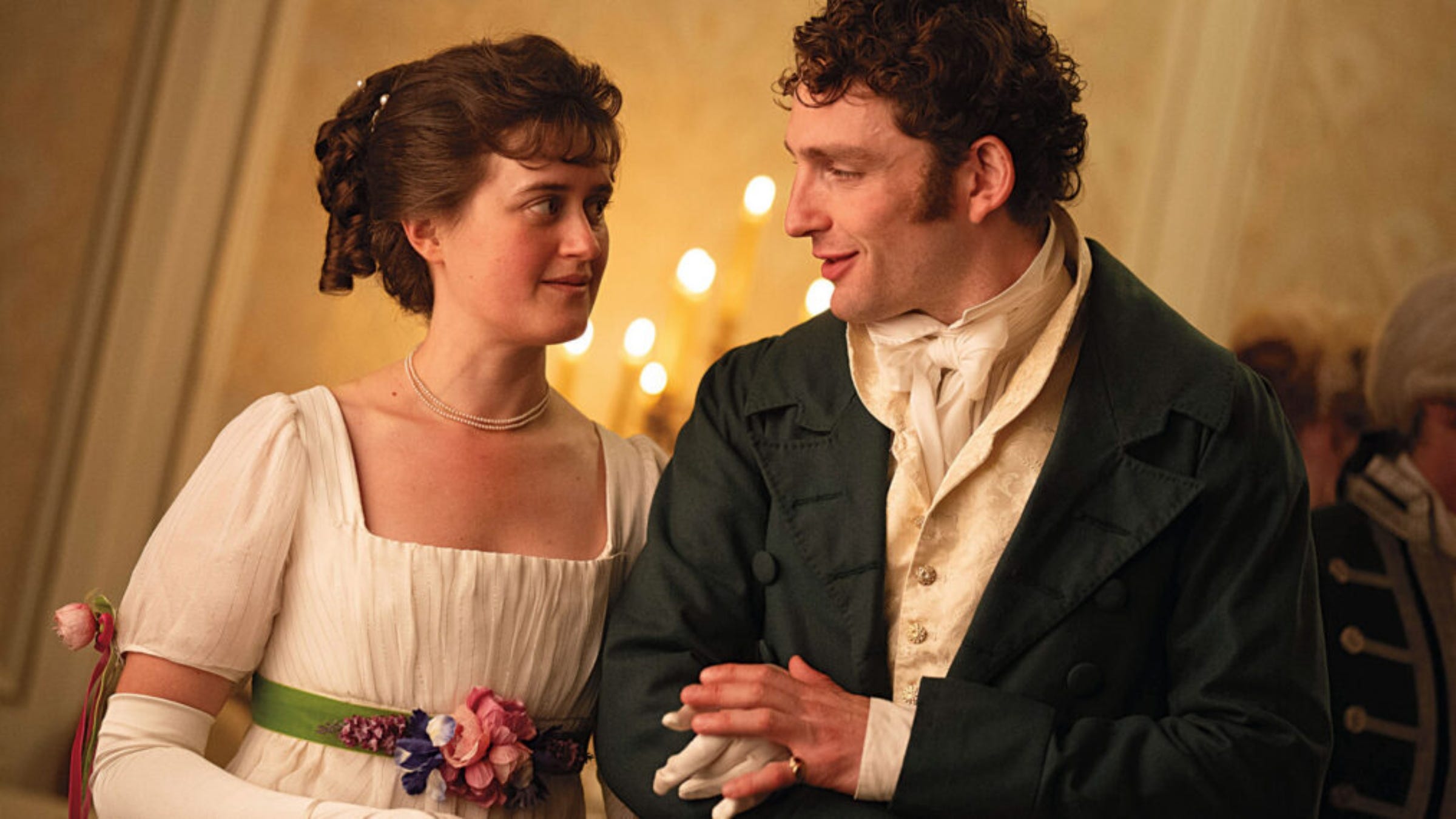
Sidenote: thank you to the casting director who cast Dónal Finn and Laurie Davidson as Mary’s two love interests. So many on-screen romances are casting bland hunky beefcakes these days - understandably, because many people find them attractive! Good for the them and good for the scarily muscled hunks! God speed, hunks and hunk-lovers! But thankfully The Other Bennet Sister went for handsome actors who are attractive in a much more interesting way and who don’t look like they spend their entire lives working out and chugging protein shakes.
And most of all, I wish I’d seen this series when I was sixteen. I hope every self-conscious teenage girl with glasses watches it. Maybe today’s teenagers don’t give a shit about wearing glasses or not - I really, really hope they don’t. But if they do, I hope watching this show does something to save them from the years of stupid self-hatred that, to this day, ensures that since I was seventeen years old I have only worn my glasses on, at most, ten nights out (seriously). I am not pretending that having to wear glasses while being in all other respects able-bodied and healthy and conventional-looking is some huge tragedy. In the great scheme of things, it is nothing. But on a personal level, it’s something. And watching The Other Bennet Sister made me confront how strong my feelings about having worn glasses for forty years really are.
That said, my attitude to my glasses has softened a lot over the decades. I had never worn my contact lenses at home anyway, and by the time I was thirty I was wearing my glasses to work; staring at a computer all day made my eyes feel dry and contacts uncomfortable. Now, at fifty, my default state is wearing glasses and I only wear my contact lenses when I’m going out with friends and getting dressed up. Contact lenses have the same role in my life as make-up - I never wear either when at home or just bumbling around to the shops or whatever, but I do wear both when I’m getting dressed up.
And yet… I pretty much always wear my contacts if I’m going out with friends and getting dressed up. Despite the fact that I see other women wearing glasses and think they look gorgeous, there is a part of my stupid brain that still thinks that me looking good=no glasses.
But I’m fighting against it, aided by the fact that I might actually have found glasses that genuinely suit me. As much as my younger self could ever love any pair of glasses, I loved the (expensive) tortoiseshell ones I had as a teenager, and replaced the lenses several times as my prescription grew stronger. I kept them right through college and then one day I sat on them and cracked one of the arms. After that I had a series of chunky black retro frames, which seemed like the coolest option but which, in retrospect, were all too heavy for my pasty little face. These glasses went through different styles from the godawful narrow rectangles of the noughties (I had a Miu Miu pair that are utterly hideous in retrospect) to large cats-eye shape, but they were all dark.
And then about three years ago, around the time I started needing varifocals which mean that my glasses’ lenses alone cost about 400 quid, I decided to stop spending vast sums on frames in expensive opticians and went to Specsavers, where I found a pair of pale pink frames in Kylie Minogue’s range that, I realised, suited me better than the dark specs I’d been wearing for the previous 25 years. As I write this I realise that since I got those specs I’ve felt a lot more confident wearing my glasses out and about. I’ve even posted photos on the Insta grid of me wearing my glasses, which never really happened before. God knows as a fifty year old woman I have issues with my appearance (it’s very hard to avoid all that pressure) but my glasses aren’t part of them. I kind of… like how I look in them.
There’s another glasses-related moment that made the published version of Our Song. Towards the end of the novel Laura stays over in Tadhg’s spare room. When she comes downstairs in the morning she assumes he’ll still be in bed, but she finds him in the kitchen.
This is the first time Tadhg and I have been together first thing in the morning and I’m struck by the weird intimacy of it all. Our messy hair. Our nightwear. The fact that I’m wearing my glasses. The fact that he hasn’t shaved for a few days now. This is not the polished Tadhg that I met in the restaurant with Tara – wow, two weeks ago. It’s all weird, but not in a bad way. At least, not as far as I’m concerned.
For Laura, intimacy means showing Tadhg her real self. Her messy-haired, unpolished self. Her glasses-wearing self.
It’s all weird, but not in a bad way.
I’m going out this evening to meet a friend for dinner and go to a book festival event. I think I’m going to wear my glasses.
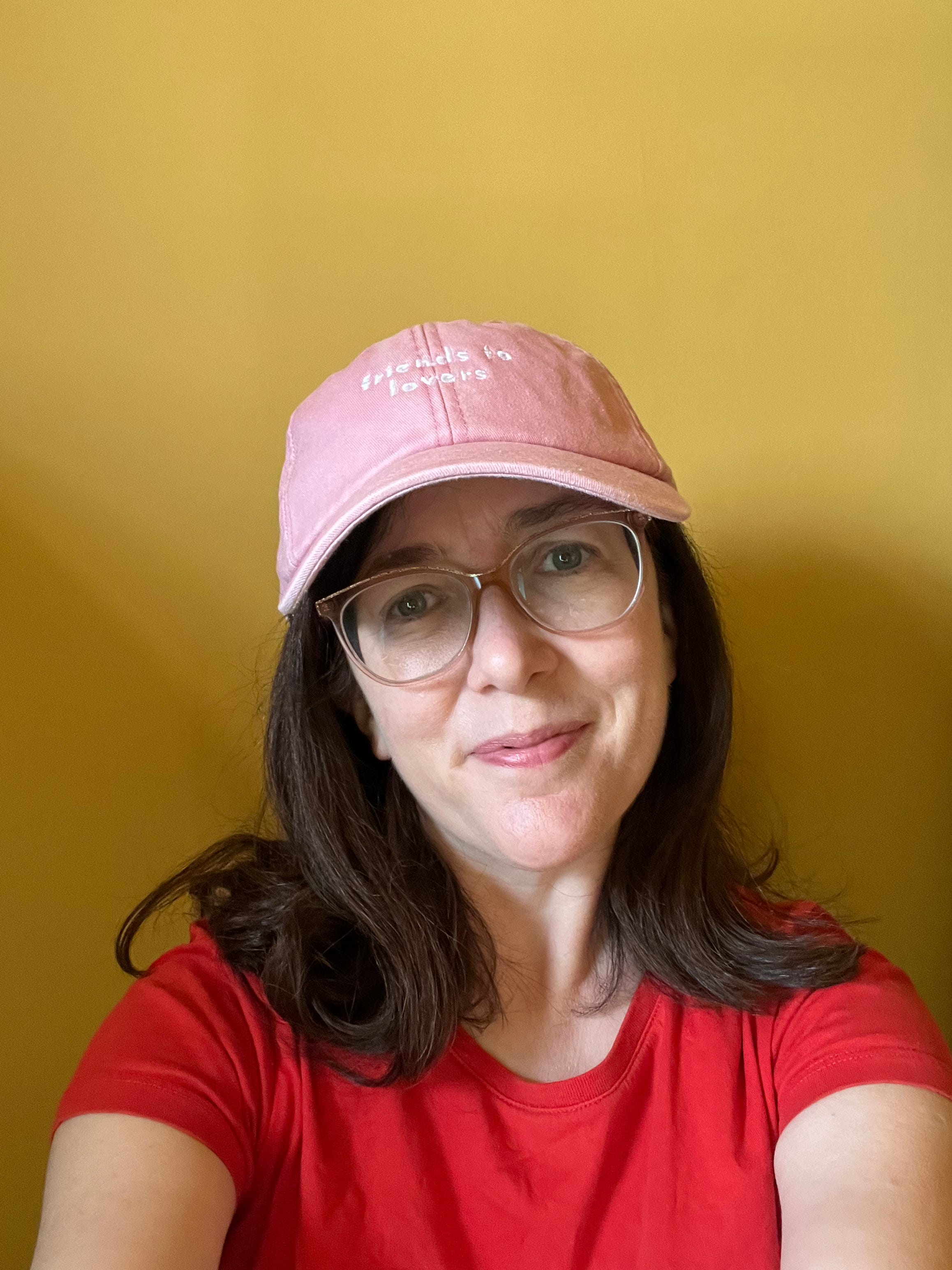
My new book Love Scene is out now and you can order it here. There is nothing about glasses in it, but there is a lot of kissing.
Relating hard to this x
I’ve worn glasses since I was about 14 and got contact lenses for my 17th birthday (and wore them pretty much constantly for the next 5 years or so. Definitely went over the 10 hour limit!). But this brought back a memory from just before I got contact lenses, I was at college and had taken my glasses off to wipe them as I think it had been raining. One of the guys in the class had looked at me and said, ‘wow, you’re really pretty without your glasses’. As if he’d barely registered my existence up til that point. Which pretty much confirmed my worst fears that no one would ever fancy me in glasses!!!!
In my 50’s now and like you I wear my glasses majority of time and contacts for nights out. ☺️